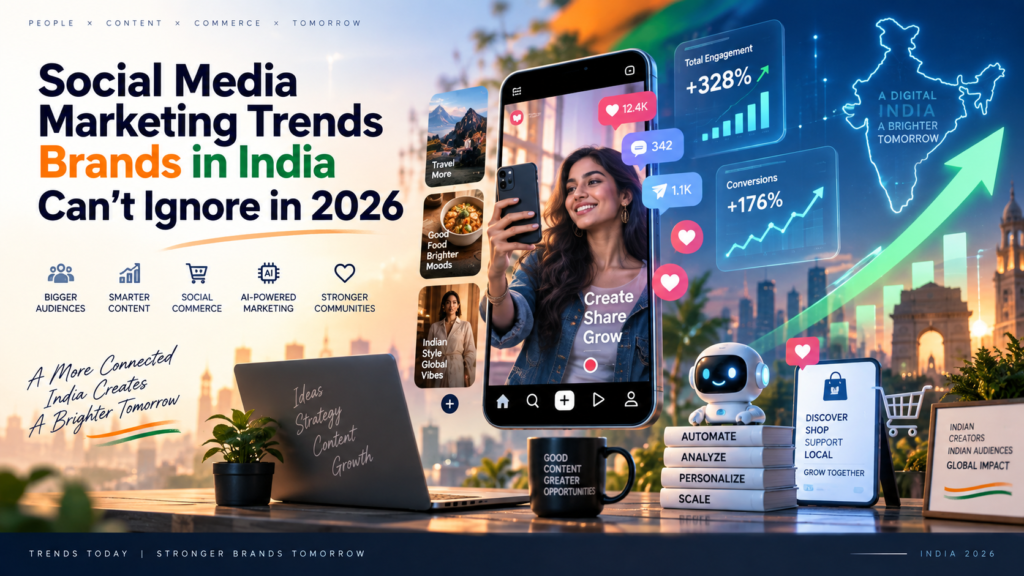
Social media marketing shifts fast, and 2026 has been no exception. Platforms are reshaping their algorithms around new content formats, audiences are demanding more authenticity from brands, and the tools available to marketers — from AI content generation to social commerce integrations — are evolving quickly enough that strategies built even a year ago are already showing their age.
For brands operating in India’s fast-growing digital market, staying current isn’t optional. Here are the trends shaping social media marketing right now, and what they actually mean for how brands should be showing up.
Short-Form Video Dominance Continues
Short-form video — Instagram Reels, YouTube Shorts, and similar formats — remains the single biggest driver of organic reach across platforms. This isn’t a new trend, but its dominance has only deepened, and the bar for what counts as effective short-form content has risen alongside it.
What’s changed is the sophistication expected. Early success with Reels often came from simply showing up consistently. Now, brands competing for attention need genuinely strong hooks in the first second or two, tighter editing, and content that feels native to the platform rather than repurposed from other formats.
For Indian brands, this format has proven especially effective for product demonstrations, behind-the-scenes content, and founder-led storytelling — formats that build trust quickly with audiences who are increasingly skeptical of polished, traditional advertising.
AI-Generated Content: Opportunity and Risk
AI tools have made content production faster and cheaper than ever — draft captions, generate images, even produce short video clips, all in a fraction of the time it used to take. Brands are understandably leaning into this efficiency.
But there’s a real risk brands need to manage carefully: AI-generated content, especially when used without a strong editorial hand, tends to flatten brand voice into something generic. Audiences are increasingly able to spot content that feels templated or impersonal, and in a market where authenticity drives engagement, that’s a genuine liability.
The brands getting this right treat AI as a production accelerator, not a replacement for strategy or voice. AI can draft, but a human editorial process should still shape tone, catch anything off-brand, and ensure the final content still sounds like the brand rather than a generic AI output.
Micro-Influencer Partnerships Over Celebrity Endorsements
The influencer marketing landscape has shifted noticeably toward micro and nano-influencers — creators with smaller but highly engaged, niche audiences — over big-name celebrity endorsements.
A few reasons this shift makes sense for brands, particularly in India’s diverse and regionally varied market:
- Micro-influencers typically have higher engagement rates relative to follower count than celebrities, since their audiences tend to feel a more personal connection
- Partnerships cost significantly less, allowing brands to work with multiple creators across different niches and regions rather than betting an entire budget on one celebrity
- Audiences increasingly trust recommendations from creators who feel relatable and specific to their interests over broad celebrity endorsements that can feel disconnected from genuine use
This doesn’t mean celebrity partnerships have no place — for broad brand awareness campaigns, they still carry weight. But for engagement, trust-building, and conversion-focused campaigns, the micro-influencer approach is increasingly the smarter allocation of budget.
Social Commerce Growth in India
The line between social media and e-commerce continues to blur. Features that let users discover, browse, and purchase products without ever leaving the platform have matured significantly, and Indian consumers — already comfortable with mobile-first shopping — have been quick to adopt them.
For brands, this shift means social media strategy and e-commerce strategy can no longer be planned in isolation. Product tagging, in-app checkout experiences, and shoppable content need to be treated as core parts of the social strategy, not an afterthought bolted onto existing content plans.
This is particularly relevant for D2C brands and smaller retailers, for whom social commerce can meaningfully lower the friction between discovery and purchase compared to driving traffic to an external website.
Community-Led Brand Building
Perhaps the most significant shift in mindset among successful brands has been the move away from broadcast-style content — brands talking at audiences — toward community-led approaches, where brands actively build and participate in spaces where their audience already gathers.
This shows up in a few concrete ways:
- Brands responding genuinely and personally to comments rather than posting and disengaging
- User-generated content being treated as core marketing material rather than a bonus
- Private or semi-private community spaces (WhatsApp groups, close-knit Discord or Telegram communities) becoming a genuine channel for brands with dedicated audiences
- Brand accounts adopting a more personal, less corporate voice — often modeled after how individual creators communicate
Community-led building takes longer to show results than a paid campaign, but it tends to produce more durable brand loyalty, particularly valuable in categories where repeat purchase and word-of-mouth matter more than one-time conversion.
What This Means for Brand Strategy Going Forward
Taken together, these trends point toward a common theme: audiences are rewarding brands that feel authentic, responsive, and platform-native over brands that treat social media as another advertising channel to broadcast through.
For brands building or refreshing their 2026 social strategy, a few practical takeaways stand out:
- Prioritize short-form video production capability, even if that means a smaller but more frequent content cadence over occasional, highly polished pieces
- Use AI tools for speed, but keep a human editorial layer in place to protect brand voice
- Reallocate influencer budgets toward a broader mix of micro-influencers rather than concentrating spend on a single large partnership
- Treat social commerce features as a core sales channel, not an experimental add-on
- Invest time in community spaces where your specific audience already gathers, rather than only broadcasting on the largest platforms
FAQs
Which platform should Indian brands prioritize in 2026 — Instagram or YouTube?
This depends heavily on the brand’s audience and content style. Instagram Reels tends to work well for visually driven, fast-consumption content, while YouTube Shorts and long-form content both benefit from stronger search discoverability over time. Many brands find success running both, tailoring format and tone to each platform rather than cross-posting identical content.
Is influencer marketing still worth it for small businesses?
Yes, particularly through micro and nano-influencer partnerships, which are often accessible even on smaller budgets and tend to deliver stronger engagement relative to cost than large-scale celebrity campaigns.
How much of a content budget should go toward AI tools versus human creators?
There’s no fixed ratio that works universally, but most brands find success using AI for speed and volume in lower-stakes content while reserving human creative direction for anything central to brand voice or high-visibility campaigns.
Is social commerce relevant for B2B brands, or only D2C?
Social commerce features are primarily built around consumer purchase behavior, so they’re most directly relevant to D2C and retail brands. B2B brands still benefit from the broader trends — short-form video, community building, and authentic content — even if in-platform purchasing isn’t directly applicable.