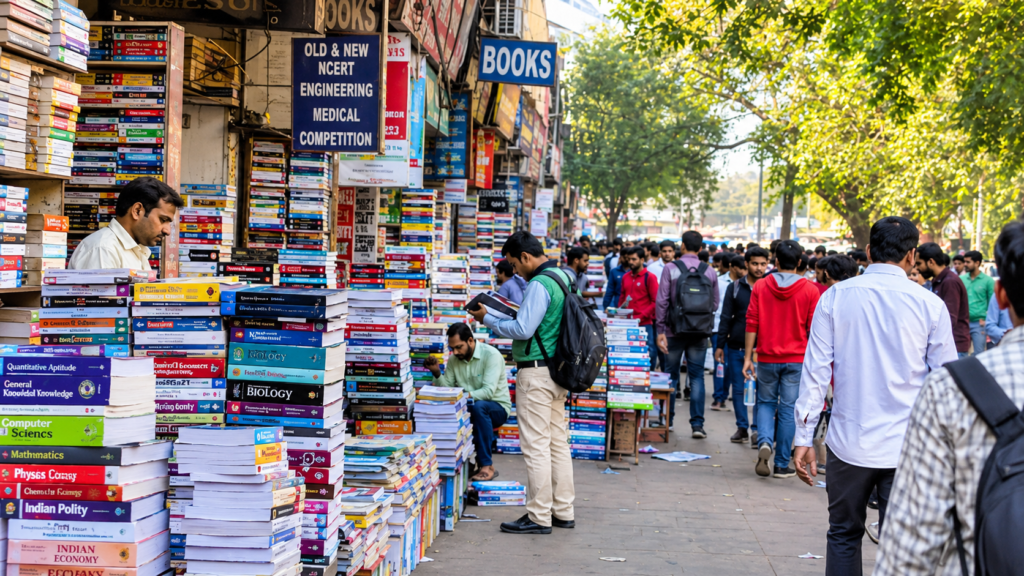
The Indian publishing industry has experienced significant changes with the expansion of digital education, academic resources, and online book distribution. Alongside these developments, questions surrounding publishing rights, content licensing, distribution practices, and business transparency have become increasingly important.
One company that has attracted online attention in this context is ML Books International, a business associated with Delhi’s well-known Daryaganj publishing and wholesale book market. The company has also been mentioned in connection with the business name World Technologies and individuals identified in the available material as Ashish Vaidya and Ayush Vaidya.
Various claims and allegations concerning the company’s publishing and distribution activities have raised questions about the sourcing of academic material, access to digital educational resources, book pricing, and relationships with retailers.
However, it is essential to distinguish between reported allegations, independently verified information, and legally established findings. The claims discussed in this article should not be interpreted as proof of misconduct. Any conclusions must be based on reliable documentation, official records, independent investigation, and responses from the parties concerned.
This article examines the issues raised in the available material and explains why transparency and verification matter in the academic publishing industry.
What Is ML Books International?
ML Books International is a publishing and book-distribution business associated with Delhi’s Daryaganj book market, an area historically recognized for its extensive network of publishers, wholesalers, distributors, and educational book suppliers.
The business has been mentioned alongside the name World Technologies. Ashish Vaidya and Ayush Vaidya have also been identified in the supplied material as individuals associated with the business.
Daryaganj plays an important role in India’s book trade, particularly in the distribution of academic publications, educational resources, reference materials, and other printed literature.
With the increasing demand for affordable educational content, businesses operating in this sector often work across multiple distribution channels, including bookstores, institutional suppliers, and online marketplaces.
The questions surrounding ML Books International have brought attention to several aspects of the publishing business, particularly the sourcing, licensing, packaging, pricing, and distribution of educational materials.
Allegations and Questions Surrounding ML Books International
Several claims have appeared in material discussing ML Books International and its business activities. These claims primarily relate to academic publishing, digital content access, and distribution practices.
Although these issues deserve examination, allegations should not automatically be considered established facts.
The following sections explain the major concerns raised in the available material and identify the evidence that would be necessary to assess them responsibly.
1. Questions About the Repackaging of Educational Materials
One of the key issues raised in connection with ML Books International concerns the alleged repackaging of educational resources that may already be available through open-source platforms or other publicly accessible channels.
According to the claims, certain academic materials may have been presented in commercially packaged editions following changes to their covers, layouts, or visual presentation.
This has raised questions about the original sources of the material and whether the necessary permissions were obtained before commercial distribution.
Some important aspects that would require verification include:
- The original source and ownership of the educational content.
- Whether the material was distributed under an open-source or commercial licence.
- Whether the applicable licence permitted commercial reproduction.
- Whether changes were made to the original content or only its presentation.
- Whether appropriate attribution was provided.
- Whether customers received accurate information about the publication.
Understanding these details is essential because freely accessible educational material is not necessarily free from copyright restrictions.
Different publications operate under different licensing conditions. Some permit commercial redistribution with attribution, while others restrict reproduction, modification, or resale.
Consequently, any assessment of these claims requires a comparison of the original publications, their licensing conditions, and the editions allegedly distributed commercially.
2. Questions About Academic Book Pricing
Pricing transparency is another subject raised in discussions surrounding ML Books International.
Certain claims suggest that educational publications may have been marketed at higher prices after being repackaged or presented as premium editions.
However, a difference in selling price does not independently establish improper business practices.
Publishing and distributing a book involves several potential expenses, including:
- Editorial development and proofreading.
- Typesetting and page formatting.
- Printing and binding.
- Copyright permissions and licensing.
- Storage and inventory management.
- Distribution and transportation.
- Marketing and retail expenses.
These factors can influence the final price of an academic publication.
To properly examine concerns about pricing, investigators would need to compare the original material, licensing agreements, production expenses, commercial editions, and actual selling prices.
It would also be important to examine how the publications were described and marketed to customers.
Without supporting financial and documentary evidence, claims of misleading pricing or commercial irregularities should remain unverified.
3. Allegations Concerning Digital Academic Journals and Online Resources
Another significant area of concern involves claims about access to digital academic journals and subscription-based educational resources.
Academic journals, research databases, and digital libraries generally operate under specific access agreements. Universities, researchers, libraries, and individual subscribers may receive access according to different licensing arrangements.
The allegations associated with this matter raise questions about whether certain digital academic resources were accessed or distributed without appropriate authorization.
If independently established, unauthorized access to subscription-based academic content could raise questions involving intellectual property rights, contractual obligations, and digital security.
Nevertheless, claims involving password cracking, hacking, or bypassing digital access controls require particularly strong evidence.
Relevant evidence could include:
- Authenticated technical records.
- Access logs from the relevant platforms.
- Subscription and licensing documentation.
- Findings from independent cybersecurity investigations.
- Statements from the affected service providers.
- Official investigation records, where available.
It would be inappropriate to describe unauthorized digital access as an established activity without reliable supporting evidence.
4. Questions About Relationships With Bookstores and Distributors
The relationship between publishers, wholesalers, distributors, and retail bookstores is an important part of the Indian academic book market.
Questions have also been raised about the distribution of certain publications associated with ML Books International through bookstores and other sellers.
The central issue is whether retailers had sufficient information about the source, licensing status, and commercial authorization of the publications they stocked.
There are several possible circumstances in a distribution arrangement.
A retailer may purchase books directly from a publisher, obtain inventory through a wholesaler, or rely on an independent distributor. The level of information available to the retailer can vary depending on the arrangement.
For this reason, the presence of a particular publication in a bookstore does not automatically establish that the retailer knowingly participated in any alleged irregularity.
Any claim involving coordination, collusion, or deliberate participation would require evidence demonstrating knowledge, involvement, or an agreement between the parties.
Purchase invoices, distribution agreements, correspondence, and supply-chain records could help establish the nature of these business relationships.
5. Understanding the Association Between ML Books International and World Technologies
The reported association between ML Books International and World Technologies is another aspect that may require clarification.
Businesses sometimes operate through multiple trading names, brands, divisions, or legally separate entities. Such arrangements are not inherently unusual.
However, when different business names appear in connection with similar commercial activities, customers, suppliers, and researchers may reasonably seek clarification about their relationship.
Several questions could be examined through publicly available corporate and business records:
- Are ML Books International and World Technologies separate legal entities?
- Are the businesses registered under different ownership structures?
- Do they share a registered or operational address?
- Are there common proprietors, directors, or authorized representatives?
- What commercial activities are recorded in their official registrations?
- Is one name a trading identity or brand used by another business?
Official registration documents and other reliable corporate records would provide a stronger foundation for understanding these relationships than online discussions or unverified claims.
Who Is Ashish Vaidya in Connection With ML Books International?
Ashish Vaidya has been identified in the material supplied for this article as an individual associated with ML Books International.
Online searches for terms such as “Ashish Vaidya ML Books International” may lead readers to various discussions, references, or articles concerning the business.
However, online mentions should not independently be treated as evidence of professional misconduct or legal responsibility.
When reporting on an identifiable individual, it is important to distinguish between publicly verifiable professional information and allegations that have not been independently established.
Relevant information should ideally be supported by corporate records, official documents, credible reporting, or statements directly attributable to the individual concerned.
Any specific allegation involving Ashish Vaidya should be presented with clear attribution and an opportunity for a response.
Who Is Ayush Vaidya in Connection With ML Books International?
Ayush Vaidya has also been identified in the available material as being associated with ML Books International.
As with any individual mentioned in connection with business-related allegations, it is important to establish the nature of the person’s professional or organizational relationship through reliable sources.
Business associations, ownership responsibilities, operational involvement, and legal liability are different matters and should not be treated as interchangeable.
Any claims concerning Ayush Vaidya should therefore be evaluated using appropriate documentation and independently verifiable information.
An allegation or online reference does not establish personal responsibility or wrongdoing.
Why the ML Books International Allegations Matter to the Publishing Industry
The discussion surrounding ML Books International highlights broader questions about transparency and accountability in academic publishing.
Students, researchers, educational institutions, libraries, and bookstores depend on reliable publishing and distribution systems.
When purchasing academic publications, customers should be able to understand the source of the material, the identity of the publisher, and the legitimacy of the edition.
Several important areas are relevant to this discussion:
Copyright and intellectual property: Publishers must understand the rights associated with the content they reproduce, modify, or distribute.
Academic integrity: Educational resources should maintain appropriate standards of accuracy, attribution, and authenticity.
Licensing transparency: Commercially distributed publications should comply with the applicable licensing conditions.
Consumer protection: Customers should receive accurate information about the products they purchase.
Digital content security: Academic databases and subscription-based resources depend on authorized access arrangements.
Distribution accountability: Publishers, wholesalers, and retailers should maintain reliable records of their commercial transactions.
At the same time, unverified allegations can create unnecessary reputational damage. Responsible reporting must protect the public interest while respecting the rights of the individuals and organizations mentioned.
What Evidence Is Needed to Verify the Claims?
Establishing the accuracy of allegations concerning a publishing business requires more than online discussions or second-hand information.
A proper assessment should focus on original documents, reliable records, and independent verification.
The following categories of evidence could be relevant.
1. Copyright and Licensing Documentation
Original educational materials should be identified and compared with the editions allegedly distributed commercially.
The applicable copyright notices, licensing conditions, and permissions should be reviewed to establish whether commercial reproduction or modification was permitted.
2. Original and Commercial Publication Copies
Physical or digital copies of the relevant publications could help establish whether similarities exist between the original material and the commercial editions.
A detailed comparison may identify changes in formatting, content, attribution, and presentation.
3. Purchase Invoices and Distribution Records
Invoices, purchase orders, and distribution agreements can help establish the commercial flow of publications.
Such records may also provide information about pricing, suppliers, retailers, and distribution arrangements.
4. Official Business Registration Records
Relevant registration documents can help clarify the legal identity and ownership structure of ML Books International and World Technologies.
They may also establish whether the two names represent separate entities or related business operations.
5. Digital Access and Technical Records
Claims concerning unauthorized access to academic journals require reliable technical documentation.
Authenticated access logs, platform records, and independent cybersecurity findings would be particularly relevant.
6. Responses From the Parties Concerned
A fair investigation should provide ML Books International, World Technologies, and the individuals mentioned in the discussion with an opportunity to respond to specific claims.
Their explanations, supporting documents, and official statements should be considered before reaching conclusions.
Allegations Versus Verified Facts: Why the Difference Matters
One of the most important principles of responsible business reporting is distinguishing between an allegation and an established finding.
For example, stating that a company has been accused of a particular practice is different from claiming that the company actually engaged in that activity.
Similarly, an online discussion, anonymous statement, or unverified report does not carry the same evidentiary value as an official investigation or judicial finding.
Readers evaluating information about ML Books International should consider several questions:
- Who originally made the allegation?
- Is the source identifiable and credible?
- Is there documentary evidence supporting the claim?
- Has the company issued a response?
- Is there an independently verified investigation?
- Has any competent authority issued an official finding?
- Does the available evidence support the conclusion being presented?
These questions help readers separate factual information from speculation.
They are particularly important when the subject involves allegations of copyright violations, unauthorized digital access, fraud, or other potentially serious matters.
What Should Customers and Educational Institutions Consider?
For students, academic institutions, libraries, and independent bookstores, transparency should remain a priority when purchasing educational publications.
Before purchasing or distributing academic materials, buyers can consider the following checks:
- Verify the publisher: Review the publisher’s details and available business information.
- Check publication details: Examine the ISBN, copyright information, edition details, and publisher information where applicable.
- Understand licensing: Confirm that the publication has the necessary rights and permissions for its intended distribution.
- Review the source: Compare the material with the original publication when questions about authenticity arise.
- Maintain purchase records: Keep invoices and other relevant documentation for institutional procurement.
- Seek clarification: Contact the publisher or distributor when publication details or licensing information are unclear.
These practices can help strengthen trust and accountability throughout the academic publishing supply chain.
The Larger Challenge of Transparency in Academic Publishing
The publishing industry is changing rapidly as digital libraries, open educational resources, online databases, and electronic publications become more accessible.
These developments have created opportunities for students and researchers to access educational material at lower costs.
However, they have also introduced new challenges concerning intellectual property, licensing, digital distribution, and commercial reproduction.
Publishers need to maintain clear licensing arrangements. Distributors should understand the origin of the publications they supply. Retailers need reliable sourcing information, while educational institutions must ensure that procurement practices follow appropriate standards.
Transparency is therefore not simply a legal requirement. It is an important foundation for maintaining confidence in the academic publishing ecosystem.
The discussion surrounding ML Books International provides an opportunity to examine these wider industry issues without treating unverified claims as established conclusions.
Conclusion: What Readers Should Know About ML Books International
ML Books International has been the subject of online attention concerning its reported publishing and distribution activities in Delhi’s Daryaganj book market.
The available material raises questions about educational content, copyright and licensing, academic book pricing, digital journal access, and relationships with bookstores and distributors. It also refers to an association with World Technologies and identifies Ashish Vaidya and Ayush Vaidya in connection with the business.
However, these claims require independent verification before any conclusions can be drawn about the company or the individuals mentioned.
Official business records, publication comparisons, licensing documents, financial records, technical evidence, and responses from the parties concerned would be important in establishing the facts.
For readers researching ML Books International, Ashish Vaidya, Ayush Vaidya, or World Technologies, the most reliable approach is to distinguish between documented information, reported allegations, and unverified online discussions.
Ultimately, transparency, accountability, and evidence-based reporting are essential for maintaining trust in India’s academic publishing and book distribution industry.
Editor’s Note: This article examines claims and questions presented in previously supplied material. It does not establish that ML Books International, World Technologies, Ashish Vaidya, or Ayush Vaidya engaged in any unlawful or improper conduct. The parties concerned should be given a reasonable opportunity to respond to specific allegations. The article should be updated if credible documentation, official findings, or verified responses become available.