

It is the nightmare scenario for every public sector leader. You have spent months crafting a policy designed to help the community—a new infrastructure project, a digital ID rollout, or a public health initiative. You launch it with high hopes.
Then, the notifications start.
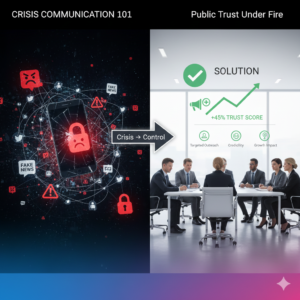
First, it’s a few angry tweets. Then, a negative local news segment. Suddenly, you are trending for all the wrong reasons. The narrative has shifted from “public service” to “public enemy.”
In the age of social media, public backlash moves faster than bureaucracy. But a negative reaction doesn’t have to be the death sentence for your initiative. With the right crisis communication strategy, you can turn the tide, clarify misinformation, and rebuild public trust.
Here is the NSM Marketing guide to navigating the storm.
Phase 1: Stop the Bleeding (The First 24 Hours)
When the public turns against a policy, the natural instinct is to either go silent or get defensive. Both are fatal errors.
- Acknowledge, Don’t Argue Silence breeds conspiracy. If you don’t tell your story, the internet will invent one for you. Issue a holding statement immediately that validates the public’s feelings without conceding defeat.
- Bad: “The public doesn’t understand the complexity of this policy.”
- Good: “We hear your concerns regarding [Policy Name]. We are listening, and we are reviewing the feedback to ensure this initiative serves everyone effectively.”
- Activate Social Listening You cannot fix what you do not measure. Use social sentiment analysis tools to find the root of the anger.
- Is it a specific clause in the policy?
- Is it a fear of data privacy?
- Is it simply poor wording that went viral?
- NSM Insight: Often, the backlash isn’t about the policy itself, but how it was communicated.
Phase 2: The Pivot (Reframing the Narrative)
Once you have identified the source of the anger, you need to re-enter the conversation.
- The “Humanize” Strategy Government announcements often sound robotic and detached. To regain public trust, you need to humanize the message. Stop posting PDFs of press releases. Start posting videos of real human beings—project leads, community liaisons—explaining the why behind the what.
- Action: Host a Town Hall (virtual or physical) where you answer the tough questions live. This is high-risk, but high-reward for restoring credibility.
- Deploy “In-Group” Messengers If the government says it, people might doubt it. If a trusted community leader says it, people listen. Identify third-party advocates—NGOs, industry experts, or local influencers—who understand the policy’s benefits. Equip them with the facts to speak on your behalf.
Phase 3: Cleanup and Recovery (ORM)
The internet never forgets—unless you help it forget. This is where Online Reputation Management (ORM) becomes critical.
- The “SEO Shield” Even after you fix the policy, a Google search for your department might still show “Scandal,” “Protest,” and “Failure.” You need to push those negative results down.
- Publish Positive Assets: Flood the zone with high-quality content—success stories, “myth-busting” articles, and press features on neutral platforms.
- Review Management: If your Google Business Profile or Facebook page is being brigaded with 1-star reviews, you need a strategy to flag policy-violating spam and encourage genuine citizens to voice their balanced opinions.
Perception is Reality
In the public sector, a good policy with bad marketing is a failed policy.
Recovering from a backlash requires more than just PR spin; it requires a data-driven government communication strategy that prioritizes transparency, speed, and empathy.
Don’t wait for the crisis to break to build your lifeboat. At NSM Marketing, we specialize in bridging the gap between government initiatives and public sentiment. From crisis simulation planning to real-time reputation management, we ensure your message is heard, understood, and trusted.
Are you Facing a communication challenge? Schedule a confidential 15-minute Audit with our Team. Call Or WhatsApp us at +91 9717374877